


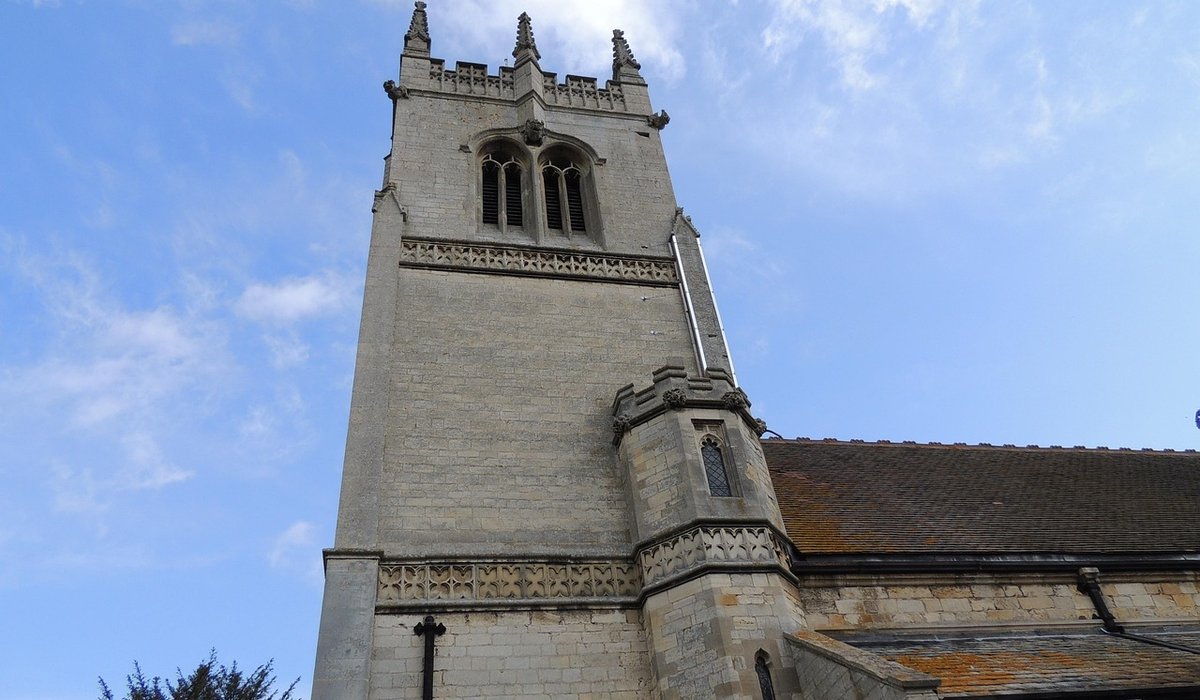
The Bells Are Not Playing a Tune
Change ringing is one of Britain’s quieter obsessions. Visit a parish church on a Sunday morning and you may hear the bells tumbling in what sounds like a cheerful riot. In fact, every bell is following a mathematical pattern. There is no sheet music, no melody and no conductor waving a baton. Instead, a band of ringers stands in a circle, each holding a rope, and works through a method: a prescribed sequence of changes that governs when each bell sounds. The result is not a tune but a pattern of permutations, rung on heavy bells hung in a medieval tower. It is part music, part logic puzzle and part physical teamwork.
For a beginner, the first surprise is that ringers do not read notes. They learn methods by heart, often drawn as a blue line on paper. The line shows where your bell goes next: up or down the order. The second surprise is that each ringer controls one bell, pulling the rope at exactly the right moment so the clapper strikes the bell’s soundbow. Do it wrong and the rhythm stumbles.
Standing in the Ringing Chamber
Most towers have six or eight bells, though some have ten or twelve. The ringers stand in a circle in the ringing chamber, facing inwards. Each rope hangs through a hole in the ceiling. The rope has three parts you need to know: the sally, the woollen grip near the top; the tail end, the plain rope below the sally; and the stay, the bar that stops the bell turning full circle. Pulling the sally gives a handstroke; pulling the tail end gives a backstroke. They alternate, giving the ringing its steady, walking pace.
A bell is not rung by brute strength. A well-hung bell is balanced and predictable. Your job is to control the rope, not fight it. You learn to feel the bell’s weight, check it at the balance, and pull cleanly so the clapper strikes without a clang or rattle. The sound should be even, whether you ring the treble, the lightest bell, or the tenor, the heaviest. You do not swing that by muscle alone; you let the bell do the work.
Positions, Numbers and the Art of Striking
When bells ring in order from the lightest to the heaviest, that is called rounds. Each bell has a number: 1 is the treble, 2 is the second, and so on. If you ring the treble, you follow the ringer on the second. If you ring the tenor, you follow the ringer on the ninth, and the tenor often rings last in every change. That is called covering.
Change ringing begins when ringers swap places. A change is a new order of the bells. Rounds on six bells is 123456. The first change might be 214365, where adjacent pairs swap. The method tells you which swaps happen and when. Ringers do not decide on the spot; they follow the pattern. The skill is to place your bell exactly in its new position, neither too early nor too late. Ringers call this striking. Good striking is the whole point. A method rung with ragged striking is worse than rounds rung perfectly.
Plain Hunt: Your First Method
The simplest method is Plain Hunt. On six bells, you start in rounds. Then you swap with your neighbour, then the next bell, then the next, until you reach the end of the row. Then you turn around and come back. On paper it looks like a zigzag. In the tower it feels like walking up and down a staircase while a rope pulls at your hands. The treble in Plain Hunt goes: lead, second, third, fourth, fifth, sixth, fifth, fourth, third, second, lead. Then repeat. That is the blue line.
Beginners often learn Plain Hunt on the treble first, because the treble has a simple path. Once you can ring Plain Hunt reliably, you can learn Plain Bob, Grandsire and other methods. Each has its own pattern of dodges, leads and places. Do not rush. A ringer who can strike Plain Hunt well is more useful than one who muddles through a Surprise method.
Why Sunday Ringing Is a Team Sport
Change ringing is not a solo performance. Every ringer depends on the others. If the treble ringer speeds up, the whole band feels it. If the tenor ringer is late, the rhythm lurches. That is why ringers talk about rope sight: watching the ropes around you to keep the spacing even. You do not stare at your own rope. You watch the circle. You listen. You adjust.
Sunday ringing is often a short service touch: rounds, call changes and perhaps a method. A call change is a change called out by the conductor, such as “2 to 3”, which tells two ringers to swap. It is simple, musical and forgiving. A touch is a longer piece that starts and ends in rounds. After the service, ringers may ring a quarter peal or a peal, lasting from forty-five minutes to over three hours. Those long performances are the marathon of the tower.
Your First Few Practices
If you want to learn, find a local band. Most towers welcome beginners and will teach you on a silenced bell or a simulator before you ring with the full band. Wear comfortable shoes, bring a small notebook, and be prepared to listen more than you pull. A few habits will serve you well:
- Learn the ropes first. Before methods, learn to handle a bell safely: handstroke, backstroke, checking at the balance and stopping cleanly.
- Count out loud. Saying your place— “one, two, three”—helps you keep time and notice when you are late.
- Watch the conductor. Even in methods, a “bob” or “single” may change the pattern. Know where you are in the row.
- Practise little and often. Ten minutes of focused rope handling beats an hour of tired pulling.
British church bells have rung for centuries, through plagues, wars and quiet Sundays. The methods may look like maths, but the experience is human: a circle of people, a rope in each hand, and a pattern that only works if everyone listens. That is the quiet miracle of change ringing.


Leave a reply