


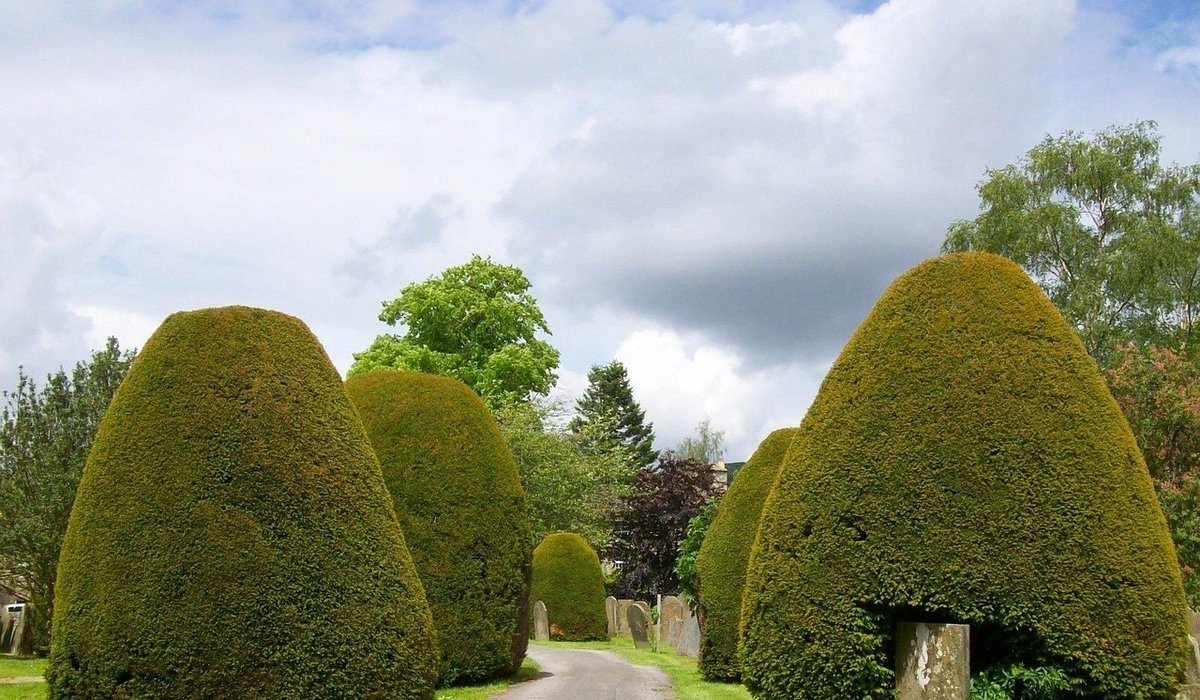
Why churchyards punch above their weight
Few places in the British landscape have been left alone for as long as a churchyard. While surrounding fields were ploughed, drained and dosed with fertiliser, the ground around the church was often simply mown, grazed by a few sheep, or quietly forgotten. The result is fragments of unimproved grassland, ancient yew and lime trees, lichen-crusted stone, damp wall bases and undisturbed soil that may not have been turned for centuries. A churchyard of two or three acres can hold more wildflower species than a whole parish of modern farmland.
That value is fragile. It depends almost entirely on how the grass is cut, when, and how often. Recording what lives there is the first practical step towards protecting it, because a mowing contractor, a churchwarden and a Parochial Church Council will all respond better to a list of species and dates than to a general plea to leave the grass longer.
Before you start: permissions and practicalities
Churchyards are working places of worship, so a little courtesy goes a long way. Speak to the incumbent and the churchwardens first, and mention your plans at a PCC meeting if you can. Surveying itself needs no faculty, but digging soil pits, fixing permanent markers or putting up nest boxes might, so ask before you improvise.
- Work in pairs, wear something visible, and keep well clear of graves, memorials and funeral parties.
- Sketch a simple plan of the churchyard and divide it into named compartments — north wall, lychgate lawn, old yew corner. Everyone can then use the same words.
- Record an OS grid reference for each compartment, along with the date, time, weather and who was recording.
- Visit at least twice a year: late May to early July for the hay-meadow flora, and again in September for the aftermath.
- Keep a notebook and a camera. Photographs of a flowering patch settle more arguments than memory ever will.
Surveying wildflowers and grassland
A 50cm square quadrat — a folding wire frame is ideal — placed at random ten times in each compartment gives a surprisingly solid picture. Estimate the percentage cover of each species, or use the simple DAFOR scale: Dominant, Abundant, Frequent, Occasional, Rare. What matters is consistency, not precision.
Learn a dozen indicator species and you will be able to judge the health of the grassland at a glance. Look for ox-eye daisy, common knapweed, cowslip, lady's bedstraw, bird's-foot trefoil, yellow rattle, meadow buttercup, burnet saxifrage and any orchids. These signal long-undisturbed, low-fertility ground. Conversely, heavy perennial rye-grass, docks, nettles and cow parsley usually point to enrichment, often from mowings dumped in a corner or from leaf litter.
Note the structure as well as the species: fine-leaved fescues and bent grasses suggest a genuine old meadow, while tall tussocky grass with deep litter is usually a sign that cuttings have not been cleared. Yellow rattle is worth mapping every year, as it spreads and weakens the grasses around it, quietly making room for flowers.
Insects: the quickest wins
Invertebrates respond fast to a change in mowing, which makes them the most rewarding group to monitor. A simple butterfly transect works well: choose a fixed route of about 200–400 metres, walk it once a week from April to September between 10am and 4pm, and count butterflies within a five-metre box ahead of you. Meadow brown, ringlet, gatekeeper, marbled white and common blue are the usual churchyard regulars, and their numbers will tell you whether nectar and larval food plants are holding up.
For bees, ten-minute timed counts on a flowering patch are enough. Watch a square metre of knapweed or bird's-foot trefoil and tally bumblebees, solitary bees and hoverflies by broad type. Note the date each key plant comes into flower, too, as early and late nectar sources are disproportionately valuable.
- Map yellow meadow ant mounds; they indicate old, undisturbed turf.
- Look for cuckoo spit, leaf mines and galls — easy to record and rarely surveyed.
- Leave a few log piles and check them monthly for beetles and centipedes.
- Search walls and headstones for lichens and mosses; photograph rather than scrape.
Birds, bats and the rest
Four early-morning visits between April and June will give a decent breeding bird picture. Stand still for ten minutes in each compartment and note every singing male; a churchyard with song thrush, blackbird, robin, wren, dunnock and great tit is doing well. Watch for spotted flycatcher and mistle thrush in older yews, and check towers and porches for owls, kestrels and roosting bats.
A dusk emergence count at the church tower in July is a memorable evening's work, and simply counting bats as they leave does not require a licence — handling them does. For slow worms and hedgehogs, lay a few pieces of corrugated metal or old roofing felt in quiet corners and check beneath them weekly, replacing them exactly as you found them.
Turning records into mowing advice
Your records only protect wildlife if they change what happens on the ground. Write a single-page note for the PCC and the mowing contractor: a plan of the churchyard with zones marked, a short species list for each, and clear cutting dates.
- Formal zone — paths, entrances and the area around new graves, cut regularly and short.
- Wildflower zone — one cut in late July or August, after seed has set, with all arisings raked off and removed.
- Rough margins — a metre or two along walls and boundaries, cut on a two- or three-year rotation so some seed heads and tussocks always survive the winter.
- Never cut everything at once, and always strim from the centre outwards so that insects and the occasional slow worm can escape.
Send your records to the county environmental records centre at the end of each season, and keep a copy in the church. Then review: if butterfly numbers fall after a change in cutting, you have the evidence to adjust. Over a few years, that quiet, well-kept ledger of dates and species becomes one of the most useful conservation documents your parish owns.


Leave a reply