


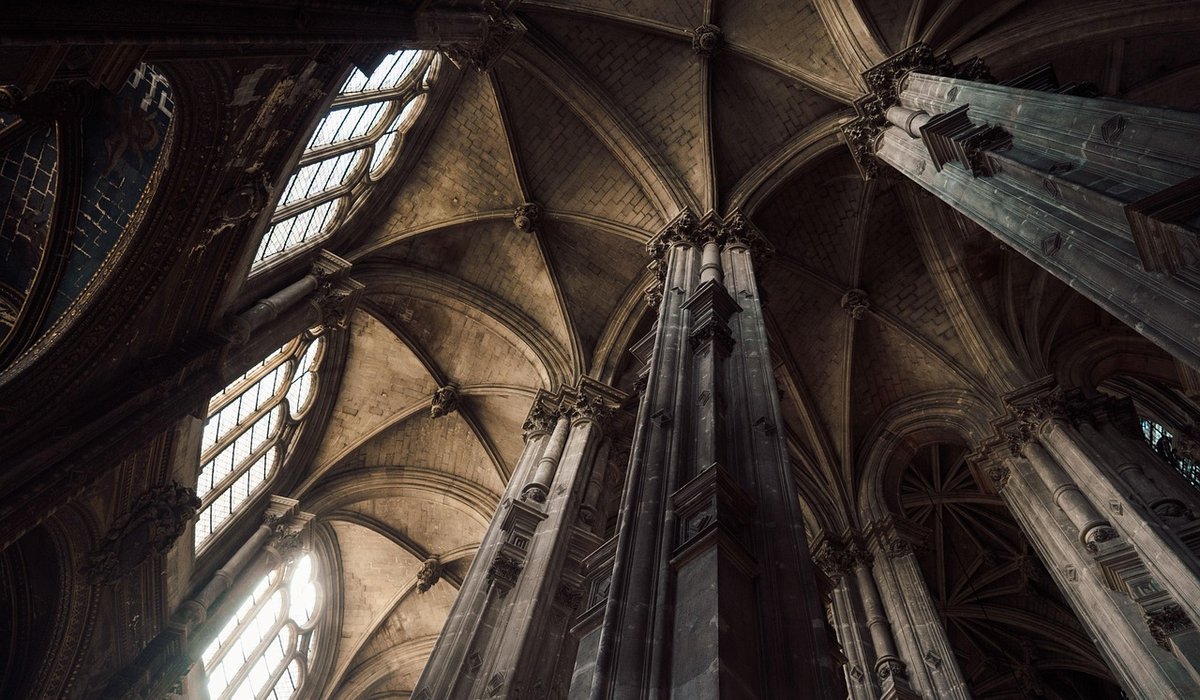
Why Churches Deserve a Slower Approach
Step into a parish church on a weekday afternoon and the quiet is the point. These are usually the oldest buildings in a community, still in daily use for worship, funerals, private prayer and the occasional bring-and-buy sale. Your camera is a guest in that space.
Low light is only half the challenge. Fragile furnishings, uneven floors, worn steps and other people's devotions all demand care. The good news is that patience and a handful of technical habits will see you through — and produce far better pictures than a snatched, flash-lit frame ever could.
Ask First, and Ask the Right Person
Most English churches are open during daylight hours and most are delighted that people want to photograph them. That said, permission is not a formality. In the Church of England, the people to approach are usually the churchwarden, the incumbent or the parochial church council; cathedrals and many larger churches publish a photography policy, often on a notice near the entrance or on their own website. Say what you would like to photograph, how long you expect to take, and whether the images are for personal use, a parish newsletter or publication.
- Ask specifically about flash — many churches prohibit it outright.
- Ask about tripods, which are often banned as trip hazards or because they block aisles.
- Ask whether any area is closed: a vestry, a side chapel, a tower, part of the churchyard.
- Ask what is happening that day. A funeral, a school visit or a rehearsal changes everything.
Then leave a donation, whether or not anyone asks. Heating, insurance and stone repairs are paid for by the people who just welcomed you.
Silent Settings for Dim Interiors
Turn off flash, the autofocus beep and the focus-assist lamp before you go in. If your camera has a silent or electronic shutter, use it — the click of a mechanical shutter carries a long way down a stone nave. Most phones can be muted too.
- Flash: off, always. Never bounce it off a ceiling either; the light still sprays across textiles and startles anyone praying.
- ISO: raise it. Modern sensors handle 3200 or 6400 comfortably, and a little grain beats a blurry, underexposed file.
- Aperture: f/2.8 to f/4 for hand-held work, f/8 if you are properly supported and want the whole chancel sharp.
- Shutter speed: 1/60 sec or slower is often unavoidable. Brace yourself against a pillar or a wall, breathe out, and squeeze gently.
- Lens: something wide — around 24mm to 35mm on a full-frame camera — suits aisles and arches. A longer lens is useful for carving and glass.
- Support: a bean bag on a bench is gentler than a tripod and less likely to be refused.
People, Prayer and Privacy
Never photograph anyone at prayer, during a service, or at a funeral or wedding. If a worshipper, volunteer or visitor is recognisable in your frame, ask first; most people say yes, and the picture is usually better for the conversation. Children need a parent or carer's consent, without exception.
If someone asks you to delete a photograph, do it cheerfully and immediately. Some of the finest details in a church involve no people at all: a carved bench end, a kneeler, a hymn board, a brass, a worn stone step. Those photographs are also the ones most likely to be welcomed by the church itself.
Hands Off the Fabric
Do not lean on monuments, tombs, screens or box pews, and never move furniture, kneelers, hassocks, flowers, Bibles or service books to improve a composition. Ask if something must be shifted, and expect the answer to be no.
- Keep flash well away from textiles, embroidery, watercolour monuments and painted ceilings, which fade with repeated exposure.
- Floor brasses and ledger stones are graves. Walk around them, not across them.
- Watch for damp stone, crumbling plaster and loose tiles, especially in unheated churches.
- Bag straps and tripod feet scratch polished brass and medieval tiles. Take care where you set things down.
Working with the Light, and Leaving Well
Windows are your illumination. Photograph towards them in the early morning or late afternoon, when low sun rakes through south and west glass, and keep yourself out of the frame so your own shadow does not fall across the aisle. On dull days, expose for the brightest window and let the shadows go deep; the contrast is part of the atmosphere. Bracket a few frames and decide later.
Before you go, put everything back as you found it, switch off any light you turned on, close gates behind you, and thank whoever let you in. If you share the images, caption them accurately, and check with the church before publicising the location of an isolated building that relies on being left alone. Best of all, offer the church a copy of your favourite frame — many are glad of a good photograph for a newsletter, a guidebook or a fundraising appeal. A careful picture, taken quietly, is a small gift back to a building that has offered centuries of welcome.


Leave a reply